Why Your Headaches Are Not “Just a Stress Problem”
If you’ve been a listener of 9 to 5 Wellness for a while, you know how often I hear the same complaint from the busy professionals I work with: tight shoulders, a nagging headache that won’t quit, and this quiet feeling that they’re just supposed to live with it. As an exercise physiologist, I see how much this steals from people’s focus and productivity at work. So for this episode, I brought on someone I’ve wanted to talk to for a long time — Dr. Jono Taves, known online as “The Headache Doctor,” a Mayo Clinic-trained physical therapist who has spent the last eight years at his practice, Novera Headache Center, helping over 1,500 people get to the root of their headaches instead of just managing the symptoms.
I’ll be honest, this conversation shifted how I think about headaches entirely.
The problem with how headaches get diagnosed
I’ve always suspected there’s a gap in how migraines and chronic headaches are diagnosed, and Dr. Taves confirmed it. There’s no blood test for a migraine. There’s no scan that says “yep, that’s it.” Instead, diagnoses are built almost entirely from symptoms — you describe what you’re feeling, and a provider matches it to a category. The problem, as he put it, is that these diagnoses aren’t tied to anything objective. That’s why so many of us have friends who’ve been told they have tension headaches, sinus issues, or migraines almost interchangeably, even though the symptoms overlap constantly.
Dr. Taves explained that headaches fall into two buckets: primary, where the headache itself is treated as “the problem,” and secondary, where the headache is a symptom of something else going on in the body. He’d love to see far more headaches treated as secondary, because that’s when you can actually find and fix the underlying driver instead of just cycling through medication.
It’s usually a movement problem, not a “still image” problem
This part fascinated me. Standard imaging — X-rays, MRIs, CT scans — is great at ruling out anything dangerous, but it’s a snapshot. Our bodies, and especially our necks, are built to move constantly. When the upper neck gets stressed or irritated, it sends a signal that gets processed in the same area of the brain stem as signals from the head and face. The brain can’t always tell the difference, so pain that starts in the neck can easily be felt as head or facial pain. That’s the objective piece that’s so often missing from a standard workup.
The three-legged stool
Dr. Taves walks patients through what he calls a three-legged stool framework:
- Where the pain is actually coming from — usually the neck, jaw, and shoulders, and the dysfunction and tension that build up there over time.
- Developmental barriers — things like hypermobility (including conditions like Ehlers-Danlos) or airway issues from childhood that shaped how the jaw, palate, and neck developed.
- Your overall systemic health — food triggers, hormone shifts, stress, and sleep, all of which change your body’s threshold for tolerating pain.
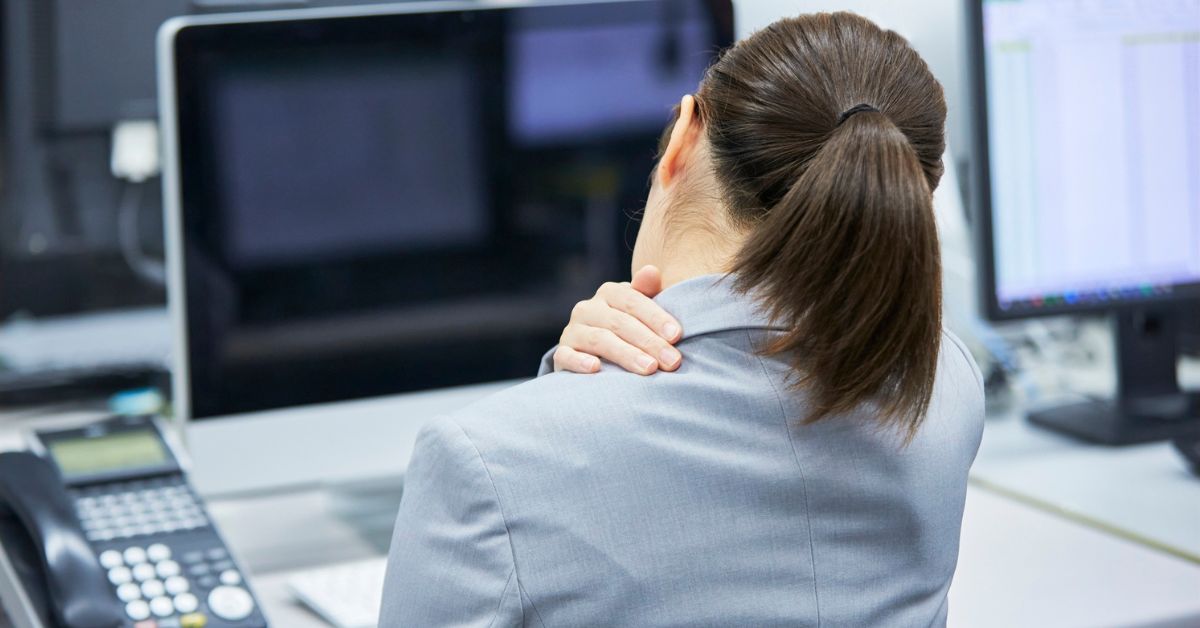
The bowling ball analogy he used really stuck with me. Your head weighs about 10 to 12 pounds. If someone handed you a 10-pound bowling ball and told you to hold it out in front of you without moving for eight to ten hours a day, your arms would fatigue fast. That’s essentially what prolonged desk sitting does to your neck. It’s not “good stress” like the kind that builds muscle — it’s the kind that wears down joints and muscles over time because you’re stuck in one static position.
Airway, hormones, and food all play a role too
A few things I want to flag for our listeners specifically:
- Airway matters more than most people realize. Mouth breathing keeps your body stuck in fight-or-flight and can be a mechanical driver of jaw tension and neck tightness, especially overnight. Dr. Taves is a big advocate for nasal breathing aids like Breathe Right strips or mouth tape.
- Women are three times more likely to experience migraines, partly due to higher rates of hypermobility and partly due to estrogen fluctuations, since estrogen acts as a natural pain protectant. A dip in estrogen doesn’t cause the neck issue, but it lowers your ability to tolerate it.
- Food and gut health affect inflammation levels body-wide, which can lower your overall threshold for pain. But as Dr. Taves emphasized, diet alone is rarely the single cause — it’s one leg of the stool, not the whole stool.
What you can actually do today
My favorite part of this conversation was how practical Dr. Taves got. His recommendations for anyone dealing with recurring headaches or neck-related migraines:
- Build in small movements throughout the day — a standing desk, frequent walks, stretching breaks (I call these “posture breaks” with my own clients).
- Pay attention to sleep position. Avoid stomach sleeping, use a supportive pillow, and hug a pillow or place one between your knees if you sleep on your side.
- Support nasal breathing at night if you’re a mouth breather.
- Move toward a whole-foods diet to lower overall inflammation.
- Start tracking your headaches against your posture and positions that day — what were you doing? Sitting? Watching a movie hunched on the couch? Patterns show up fast once you start paying attention.
None of this replaces working with a specialist if your headaches are frequent or debilitating, but it’s a solid starting point while you figure out your next step.
If you want to go deeper, Dr. Taves shares a ton of great science-backed content on Instagram as The Headache Doctor, and you can learn more about his practice at https://NoveraHeadacheCenter.com.
Take care of your neck. It’s carrying more than you think.
This post was originally a 9 to 5 wellness podcast and was posted on aeshatahir.com.