Nutrition for Every Phase of Your Cycle and Life: A Cycle-Syncing Guide for Busy Women
Nutrition for Every Phase of Your Cycle and Life: A Cycle-Syncing Guide for Busy Women.
If you’ve ever felt ravenous one week and completely uninterested in food the next, or found yourself craving chocolate right before your period like clockwork, you’re not imagining things — and you’re definitely not broken. Your hormones are driving the bus, and once you understand how, you can actually work with your body instead of against it.
On a recent episode of the 9 to 5 Wellness Podcast, I sat down with nutritionist Kristina Krasteva, who specializes in anti-inflammatory and hormonal nutrition, to break down what it really means to eat for your cycle — and for the bigger hormonal transitions of a woman’s life, from your twenties through perimenopause. Her own journey with endometriosis pushed her to dig into how food and lifestyle influence chronic inflammation, and her insights are some of the most practical cycle-syncing advice I’ve come across for women who don’t have hours for elaborate meal prep. Here’s what busy professionals need to know.
Why Cycle Syncing Actually Matters
Most of modern life, including the way we structure our workdays, is built around a 24-hour hormonal rhythm — which happens to be how men’s bodies operate. Women, on the other hand, move through a roughly 28-day cycle made up of four distinct phases, each with its own hormonal profile. Estrogen and progesterone rise and fall in a pattern that shapes our energy, metabolism, mood, and even how well we digest certain foods.
Kristina describes the four phases using a helpful metaphor: think of them as your body’s inner seasons. Once you start viewing your cycle this way, the cravings and energy shifts stop feeling random and start making sense.
Menstrual Phase: Your Inner Winter
During your period, estrogen and progesterone are both at their lowest, and your body is doing real physiological work as the uterine lining sheds — a mildly inflammatory process. Just like winter calls for warmth and rest, this is the phase to lean into cozy, nourishing meals.
Think soups, stews, and plenty of healthy fats like olive oil and avocado to support hormone production. Because blood loss increases your iron needs, prioritize iron-rich foods — red meat and liver are excellent sources, while vegetarians can turn to legumes and spinach, which also delivers a solid dose of magnesium. Speaking of magnesium: this is the phase where dark chocolate earns its reputation as a legitimate wellness food. It supports hundreds of processes in the body, including muscle relaxation and cramp relief.
Follicular Phase: Your Inner Spring
As your period ends, estrogen begins climbing steadily toward ovulation, and your body becomes noticeably more resilient — including more insulin sensitive, meaning you metabolize carbohydrates more efficiently. This is your body’s green light to feel lighter and more energized.
Lean into salads, fermented foods like kimchi, sauerkraut, or kefir, and lighter proteins such as fish or chicken. Because your body handles stress and exertion better here, this is also an ideal window to push a bit harder in workouts and to eat enough protein to support that extra effort. Interestingly, if intermittent fasting appeals to you, the follicular phase — especially as you approach ovulation — is the time your body tolerates it best.
Ovulation Phase: Your Inner Summer
At ovulation, estrogen peaks and you likely feel your most social and outgoing. But the act of ovulation itself — the follicle releasing an egg — creates a small burst of inflammation, which is why some women notice a dip in energy right around this window.
Anti-inflammatory, cruciferous vegetables like broccoli, kale, and cauliflower are especially valuable here, as they support healthy estrogen metabolism. Keep meals light with salads, fish, or tofu, and add fiber-rich seeds like chia and flax to support gut health.
Luteal Phase: Your Inner Autumn
This is the phase most working women know all too well — and the one that causes the most frustration. As estrogen drops and progesterone rises, energy can dip, anxiety can creep in, and you may want to retreat and slow down. Your body is also becoming more insulin resistant, which is part of why cravings for carbs and sugar intensify. This isn’t a willpower failure; it’s biology. Your body is preparing for a potential pregnancy and genuinely needs more nutrients, requiring roughly 100–300 additional calories a day.
Rather than fighting the cravings, work with them. Swap in complex carbohydrates — sweet potatoes, squash, quinoa — and reach for naturally sweet, antioxidant-rich fruit like berries to satisfy a sweet tooth. Warm foods, soups, and bone broth are especially comforting and support gut health. Zinc and B vitamins, particularly B6, found in meat and other whole foods, help support mood during this more sensitive window.
Making It Work With a Full Calendar
The single highest-leverage habit Kristina recommends, across every phase, is simple: don’t skip breakfast, and eat it before your coffee. Coffee on an empty stomach spikes cortisol, which is already naturally elevated in the morning, setting off a blood-sugar rollercoaster that can tank your energy later in the day. A protein-forward breakfast — eggs, Greek yogurt with nuts and berries, or overnight chia pudding — stabilizes blood sugar and gives you steadier fuel through back-to-back meetings.
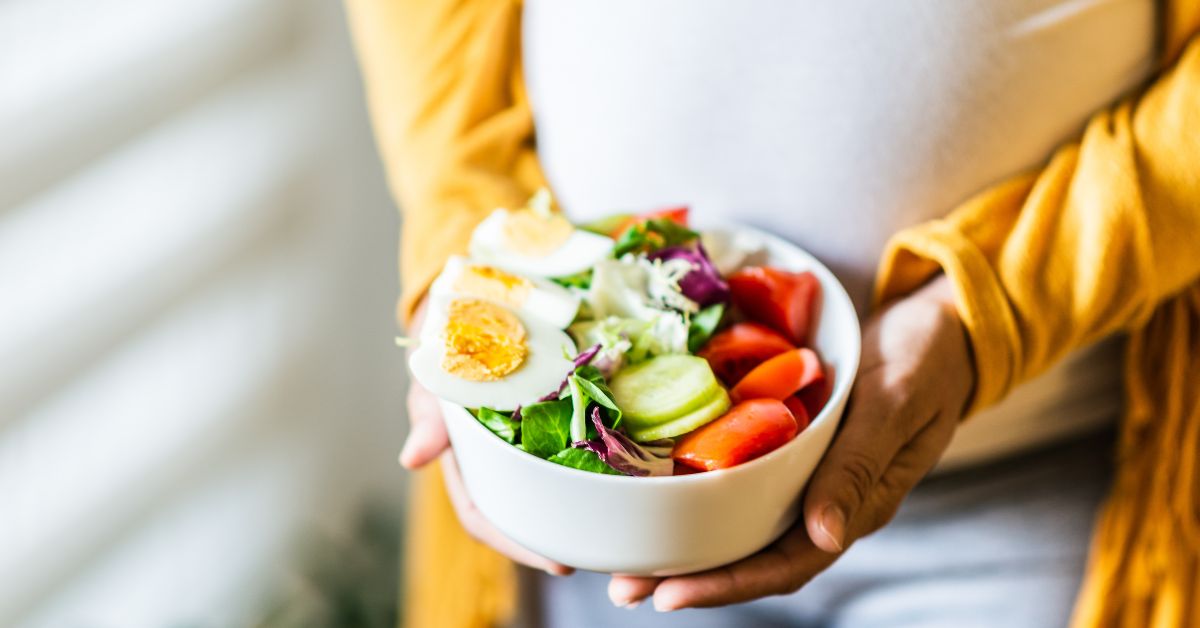
For meal prep, Kristina’s approach is refreshingly low-effort: build each meal around a protein source first, then add fiber-rich vegetables, then healthy fats or complex carbs. Boiled eggs, canned sardines, and pre-washed veggies make lunches simple, and keeping snacks like nuts or dark chocolate on hand prevents the energy crashes that come from skipping meals during a packed day.
Navigating Perimenopause and Beyond
For women in perimenopause, the rules shift again. As estrogen — your body’s natural anti-inflammatory hormone — declines, insulin resistance and low-grade inflammation both tend to increase, which is why many women notice weight gain around the waist even without eating more. This is a hormonal shift, not a discipline problem.
Kristina points to two priorities here: blood sugar stability and gut health. That means continuing to build balanced, protein-forward meals, not fearing healthy fats, and incorporating fermented foods and bone broth daily. Because estrogen also protects muscle and bone, shifting workout focus toward strength training becomes essential — not just for metabolism, but for preserving lean muscle and bone density. Annual bloodwork can also help catch deficiencies early, since nutrient absorption naturally declines with age-related gut changes.
The Bottom Line
You don’t need a rigid, complicated system to eat in sync with your hormones. Start with one shift: eat a real, protein-rich breakfast before your coffee. From there, layer in phase-specific choices — warming, iron-rich foods during your period; light, resilient-body meals in your follicular phase; anti-inflammatory produce around ovulation; and warm, complex-carb-friendly meals during the luteal phase. Add consistent strength training as you move toward perimenopause, and think of food less as a set of rules to follow and more as fuel your body is asking for.
Your hormones aren’t working against you — once you understand their rhythm, they become one of the most useful tools you have for feeling steady, energized, and well throughout every phase of life.
Want to go deeper on this topic? Listen to the full conversation with Kristina Krasteva on the 9 to 5 Wellness Podcast, where we cover even more on cycle syncing, gut health, and hormone-supportive nutrition for busy professionals.
This post was originally a 9 to 5 wellness podcast and was posted on aeshatahir.com.